Dropping below 50% and taking the wheel: The double game behind Migdal's ₪11.4 billion empire
Controlling shareholder Shlomo Eliahu has dropped below 50% in Migdal while stepping in as acting CEO—as Harel and Phoenix amass an 18.2% voting bloc and the C-suite turns over.
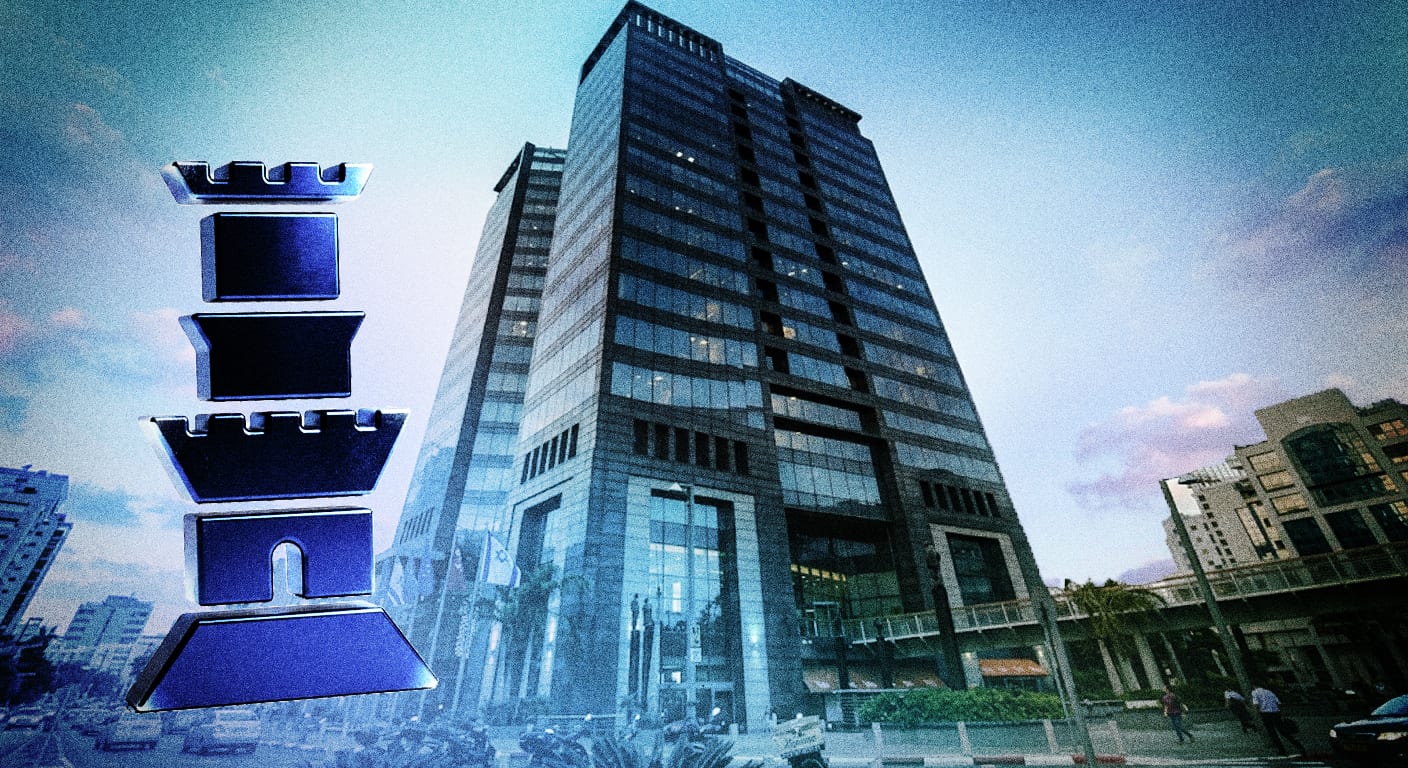
Outside the office towers of Petah Tikva, Migdal Holdings' cash engine is running at full speed with shareholders' equity exceeding ₪11 billion. Behind closed doors, however, a gripping governance drama is unfolding: Shlomo Eliahu has diluted his stake below the 50% threshold yet is now taking the CEO seat himself—just as rivals Harel and Phoenix build clout at the general meeting and finance chiefs exit through a revolving door.
On the surface, the latest financial statements of Migdal Insurance & Financial Holdings look like an institutional investor's dream. As of the end of the third quarter of 2026, the group's shareholders' equity climbed to an all-time high of approximately ₪11.39 billion—an impressive jump of nearly ₪2.8 billion in less than three years. Earnings momentum is steady, assets under management have crossed the quarter-trillion-shekel mark, and the local capital market is showering the group with billions at favorable interest rates.
Yet a deeper dive into stock exchange filings reveals a far more complex picture than the one reflected in the bottom line. Behind the facade of financial stability, an extraordinary governance and leadership drama is unfolding at Migdal: controlling shareholder Shlomo Eliahu is loosening his equity grip while tightening his operational control, his two biggest rivals in the insurance industry are already sitting inside the house, and senior management is struggling to establish executive continuity.
---
Eliahu's maneuver: Selling shares—and taking the keys
The defining story of Migdal over the past three years is Shlomo Eliahu's dual—and almost paradoxical—move. On one hand, Eliahu has sold substantial blocks of stock: from a fortified holding of 64.28% in July 2023, he dropped below the 50% line for the first time in the summer of 2025, and as of October 2026 he holds just 45.41% of the company's shares.
In the ordinary business world, slipping below an absolute majority signals the beginning of an exit or a softening of control. At Migdal, the exact opposite happened. In October 2026, after CEO Yossi Ben Baruch stepped down, Eliahu moved into the chief executive's office himself as acting CEO. At the same time, his son Israel Eliahu serves as chairman of the financial arm Migdal Capital Markets and chairman of the insurance company's nostro investment committee. The result: just as the family's equity stake shrank, its day-to-day hold over the most critical decision-making junctions became more direct and absolute than ever.
The equity vacuum Eliahu left behind, however, did not remain empty. Those who seized on his share sales to build a substantial beachhead inside Migdal are none other than his fiercest rivals in the insurance sector. Harel Group has steadily increased its position to 11.05% of the share capital, while Phoenix Group holds another 7.12%. Together, Israel's two largest institutional players command 18.17% of voting rights at Migdal. Facing a controlling shareholder who has fallen below 50%, this institutional bloc becomes a pivotal force capable of deciding sensitive general meeting votes—particularly on related-party transactions and executive compensation.
---
The cash pipeline: The insurer is locked, Migdal Capital Markets pays
Migdal's structural anomaly also shows up in how cash flows through the group. In 2023–2024, Migdal Holdings distributed cumulative dividends of ₪105 million to its shareholders. Yet that money did not come from the group's core engine, Migdal Insurance.
Under the Capital Market Authority's strict solvency regime (Solvency II), the insurance company is required to lock up massive capital buffers against its long-term liabilities and cannot upstream cash dividends to the parent company. Instead, the unit bailing out the holding company—enabling it to pay dividends and cover headquarters overhead—is the financial subsidiary, Migdal Capital Markets, which effectively serves as the group's sole liquidity pipeline.
---
A revolving door in the C-suite
While the bottom line displays impressive resilience—with net income of ₪1.83 billion in 2025 and another ₪1.42 billion in the first nine months of 2026—Migdal's executive suites have struggled to maintain calm.
Turnover across the group's financial and executive leadership over the past two years is unusual by any standard:
- Three CFOs in two years: Following the end of Tal Cohen's tenure in August 2024, David Moshe Saban was appointed to replace him—only to resign just 11 months later, succeeded in July 2025 by Itai Yanai.
- Changing of the guard at the board and executive level: In November 2024, retired Supreme Court Justice Hanan Melcer concluded his term as chairman of the board, handing the baton to Prof. Roni Gamzu. In the summer of 2026, it was CEO Yossi Ben Baruch's turn to depart "by mutual agreement" and transition to vice chairman of Migdal Capital Markets.
- Warning signs: In the background was also the early-2024 resignation of director Prof. Keren Bar-Hava, who accompanied her departure with a disclosure citing reportable circumstances—a term that invariably raises red flags for investors and regulators alike.
---
The debt market votes with its feet—despite the auditors' note
The overriding question for capital market participants is how investors price the gap between balance-sheet strength and governance noise. For now, the answer is unequivocal: the debt market is handing Migdal a blank check.
The holding company itself carries no solo debt, with all credit raising concentrated in the dedicated funding vehicle Migdal Insurance Capital Raising, which holds approximately ₪7.45 billion in bond debt. Despite a dense amortization schedule—requiring the company to repay more than ₪1 billion in principal and interest over the coming year and roughly ₪1.3 billion the year after—demand in bond offerings has remained strong. Over the past two years, the group has raised more than ₪3 billion in new bonds, enjoying a high ilAA+ rating from S&P Maalot and a rating upgrade from Midroog in the summer of 2026.
Even the most optimistic investors, however, encounter a recurring emphasis-of-matter paragraph in every quarterly report from the external auditors (Somekh Chaikin KPMG), a reminder that heavy legal exposure hangs over the group in the form of class-action lawsuits and contingent liabilities of vast scale—an inherent insurance-industry risk that could materialize on a rainy day.
---
Ultimately, Migdal faces a test of management maturity. The coffers are full, the business engines are generating cash at a record clip, and the capital market is giving it a tailwind. Yet to translate that strength into durable long-term value rather than getting bogged down in internal friction, Shlomo Eliahu will need to prove that the new model—in which the controlling shareholder is also the de facto CEO, and his biggest rivals sit in the front row at the general meeting—can deliver stability on par with the numbers on the balance sheet.