Quick flip in Ra'anana: Effi Capital sells land for ₪194 million to Shmuel Baruch partnership
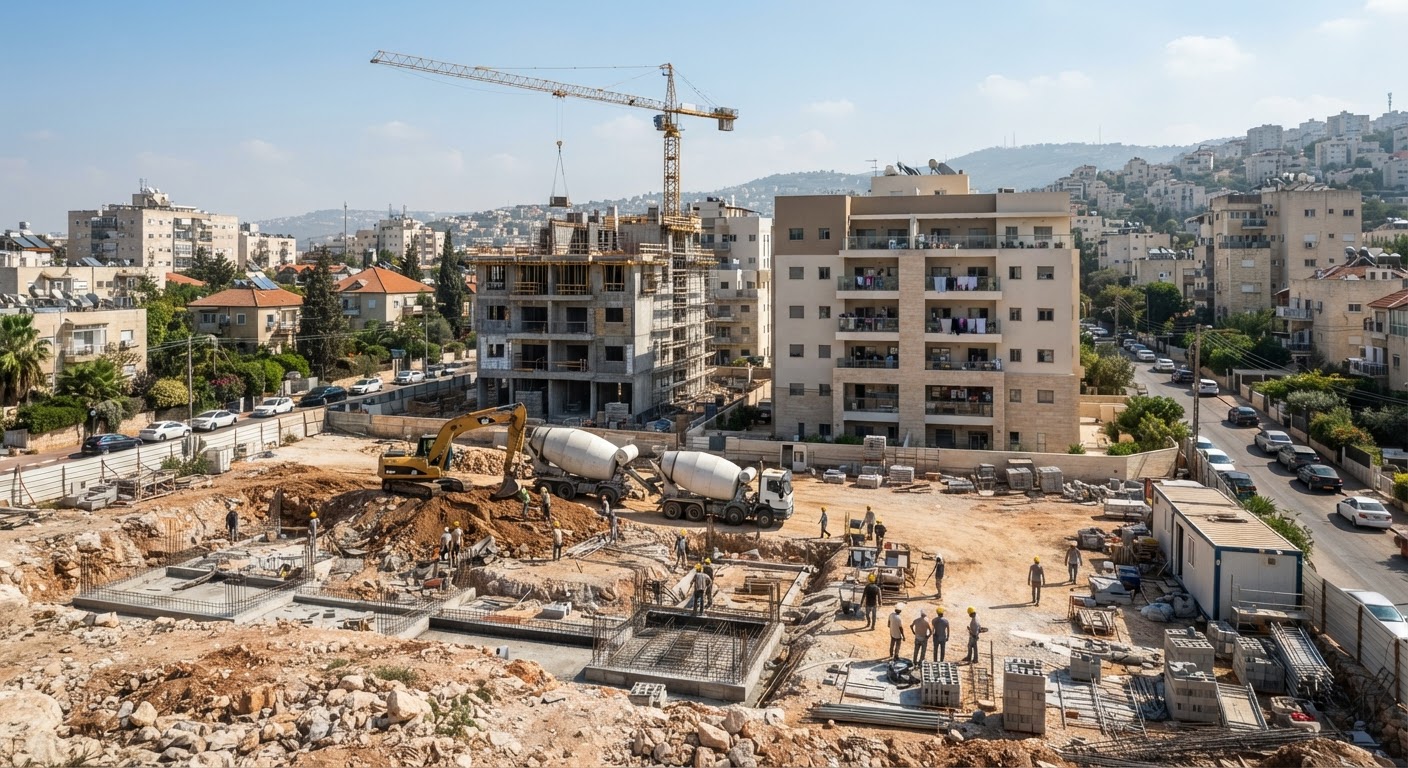
About a year and a half after winning an ILA tender, Effi Capital is monetizing land zoned for 221 housing units in Ra'anana at a pre-tax capital gain of approximately ₪5 million. Meanwhile, My Town is advancing a massive urban renewal project in Hadera.
Effi Capital is selling land in Ra'anana for approximately ₪194 million, roughly a year and a half after winning it in an ILA tender for ₪163 million. The buyer is a partnership between Shmuel Baruch and Nachshon Execution. The transaction yields Effi Capital a capital gain of approximately ₪5 million (pre-tax, for its share) and points to momentum in the residential real estate market, where My Town concurrently reported progress on a long-term urban renewal project in Hadera.
Israel's residential real estate market continues to demonstrate dynamism, with developers employing various strategies to maximize value. This was underscored in a series of filings today, led by a quick flip deal by Effi Capital Real Estate, which sold land in Ra'anana for approximately ₪194 million, just a year and a half after winning the tender. Meanwhile, other companies like My Town continue to advance long-term urban renewal projects, painting a nuanced picture of sector opportunities and moves.
Quick monetization in Ra'anana
Effi Capital reported today on the sale of its full rights in land in Ra'anana, which it won in an Israel Land Authority (ILA) tender in April 2025. The company, through a 75%-owned subsidiary, sold the land to Shmuel Baruch Investments Ltd. for a total consideration of approximately ₪193.5 million, plus expense reimbursement of about ₪0.7 million [2026-01-087977]. The original winning bid in the tender stood at approximately ₪163 million. The transaction, signed yesterday, is expected to yield Effi Capital a pre-tax capital gain of approximately ₪5 million (for its 75% stake in the selling subsidiary) [2026-01-087977].
The planned project on the land includes the construction of approximately 221 housing units, of which 177 units are under the subsidized "Target Price" (Mechira Matara) program and the remainder for the free market, alongside roughly 1,200 sq.m. of commercial space [2026-01-087977]. Proceeds from the sale will be used, among other things, to repay a loan of approximately ₪131 million taken to finance the original acquisition. The move demonstrates a short-term monetization strategy capitalizing on land value appreciation.
The buyer: A partnership between Shmuel Baruch and Nachshon Execution
On the other side of the deal is Shmuel Baruch Investments, held in equal shares (50%-50%) by public real estate firm Shmuel Baruch Entrepreneurship and Construction and Nachshon Execution and Civil Engineering [2026-01-087981]. For them, this marks entry into a significant residential project in a high-demand city. According to the buyer's filing, the first payment of approximately ₪29 million will be transferred by the end of September 2026, while the remaining consideration of approximately ₪164.5 million will be paid by December 23, 2026. The buyer's financing structure is also notable: The initial payment will be funded by equity, with Shmuel Baruch providing 30% and Nachshon Execution the remaining 70%, while the balance will be funded through external financing [2026-01-087981].
Concurrently: My Town advances urban renewal in Hadera
In contrast to the swift monetization in Ra'anana, My Town Group reported progress today on a long-term urban renewal project in Hadera. The company, through a 75%-owned subsidiary, signed an urban renewal (Pinui-Binui) agreement after securing the required majority of apartment owners on Rambam Street in the city [2026-01-088050].
Under the project, two existing buildings containing 32 apartments are to be demolished, replaced by a new tower comprising approximately 140 housing units (about 108 of which are for market sale) alongside roughly 500 sq.m. of commercial space. The project is in early planning stages, with the company estimating that submission of the town plan (TABA) is expected only during 2027, and a building permit is anticipated about two and a half years after the plan's approval [2026-01-088050]. This move highlights an alternative sector strategy—investing in complex, long-term projects requiring coordination with residents and planning authorities, but carrying high long-term return potential.